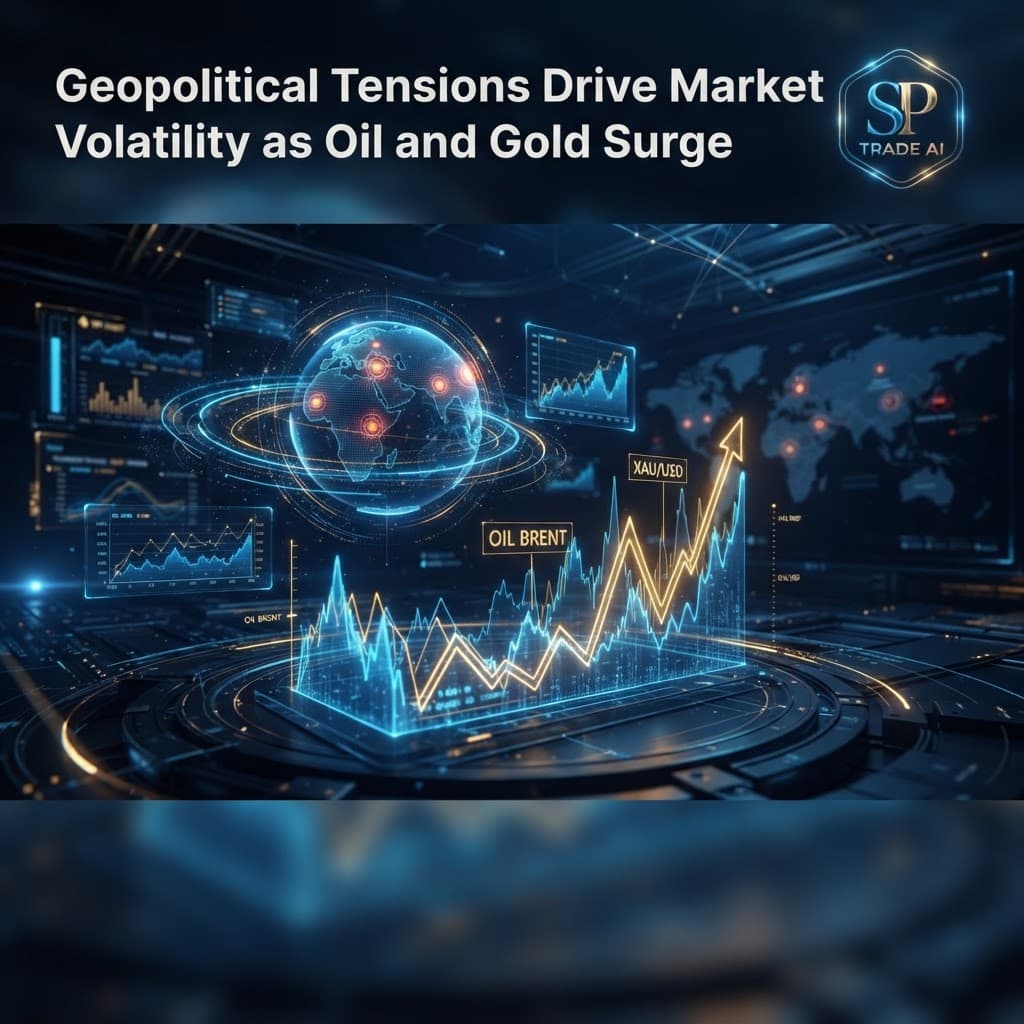
Geopolitical Tensions Drive Market Volatility as Oil and Gold Surge
Escalating U.S.-Iran tensions have triggered a surge in oil and gold prices, forcing a defensive shift in market sentiment as traders weigh geopolitical risk against Q2 earnings potential.
Market Overview: The Shadow of Geopolitical Risk
The financial landscape has shifted dramatically over the past 48 hours as the escalating military conflict between the United States and Iran has become the primary driver of market sentiment. With the tenth consecutive night of U.S. strikes as of July 21, 2026, investors are rapidly reassessing risk, causing a retreat from high-beta assets and a flight toward traditional safe havens.
Commodity Markets Under Pressure
Energy and precious metals are currently dominating the headlines. Brent Crude has climbed to $88.50 per barrel, with market analysts at Goldman Sachs warning that any significant disruption to the Strait of Hormuz could drive prices well beyond the $120 mark. This potential for supply-chain instability is having a direct impact on the global outlook for inflation.
Simultaneously, Gold has shattered previous records, breaching the $4,050 per ounce threshold. This move underscores deep-seated institutional anxiety regarding a potential worst-case scenario in the Middle East, as major players hedge against systemic risk.
Equity Performance and Sector Rotation
Wall Street’s reaction has been characteristically cautious. The Dow Jones Industrial Average shed 307.16 points (-0.59%) to close at 51,839.26, while the S&P 500 dipped 0.19%. The current market environment is defined by a clear defensive rotation:
- Outperformers: Energy (XLE) and Healthcare sectors are attracting capital as investors prioritize stability over growth.
- Underperformers: Technology and Semiconductor stocks are facing heavy selling pressure, driven by fears of rising input costs and supply chain bottlenecks.
What Traders Should Watch
As we head into the Federal Reserve’s policy meeting on July 28-29, the economic landscape remains clouded. The resurgence of energy-driven inflation risks complicating the Fed's stance on interest rates, potentially stalling the momentum of the broader equity market despite strong Q2 earnings projections of 26% growth.
Traders should remain vigilant regarding the U.S. Dollar and Treasury yields. A continued flight to liquidity could dampen the current bull run if tensions fail to de-escalate. We advise maintaining a balanced portfolio with a focus on risk management until the geopolitical trajectory becomes clearer.